How to Identify a Painting from a Photo You Took at a Museum
No wall label, no photo of the caption, just a picture on your phone. Here's a realistic order of tools for identifying a painting from an image, and what to do when a tool only accepts text.
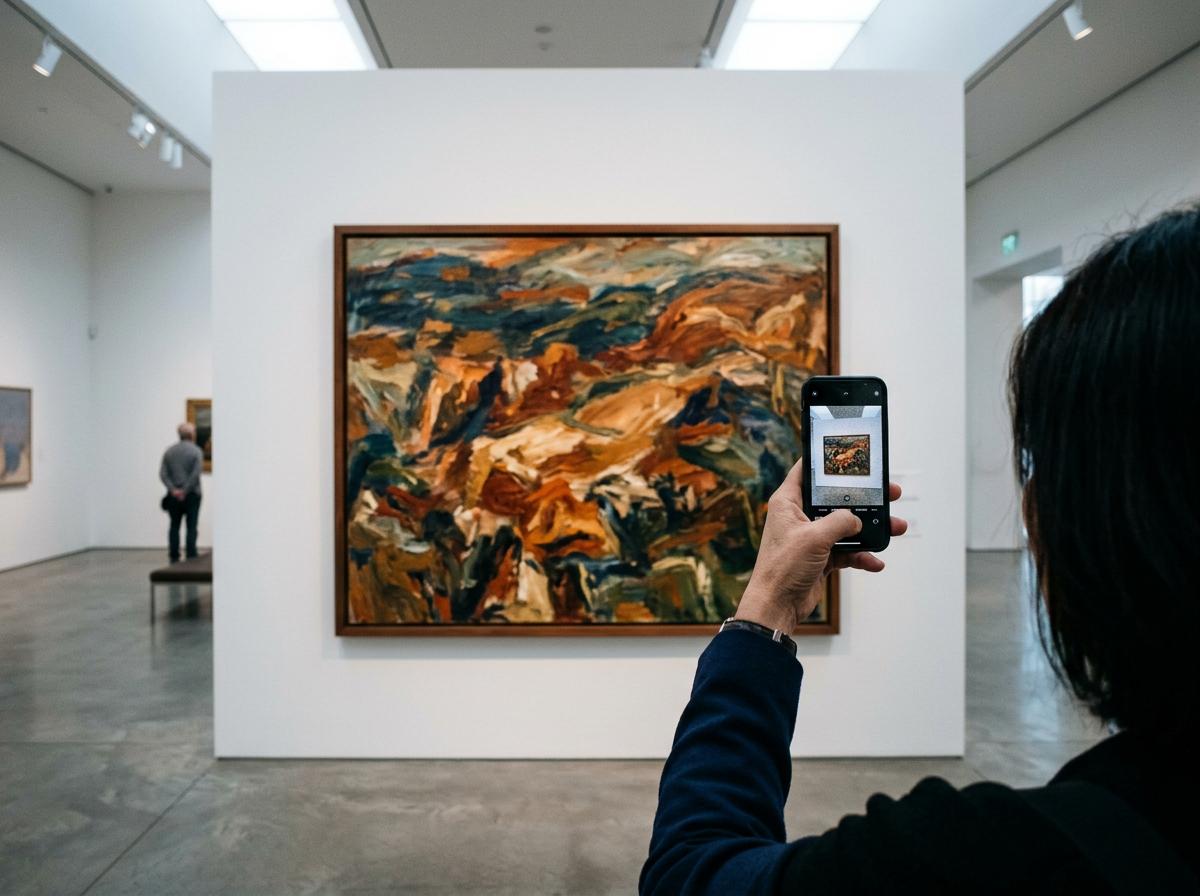
How to Identify a Painting from a Photo You Took at a Museum
You took a photo of a painting and didn't get the wall label, or the label photo came out blurry. Now you have an image and nothing else. This is a genuinely different problem from remembering a painting from years ago. You have exact visual detail, but no reverse-image tool guarantees a match, and some of the best semantic search tools for museum collections are text-only.
Here's a realistic order of approaches, including what to do when your only option is describing the image in words.
Option 1: Reverse image search
Start with a general reverse image search (Google Images, TinEye, or similar) using the photo directly. This works well when the painting is well-known or widely reproduced online. Museum sites, Wikipedia, stock photo libraries, and blogs all create matchable copies.
Best for: famous or widely reproduced paintings.
Weak for: lesser-known works, or museum pieces that aren't heavily represented online, which is most of any museum's collection.
Option 2: Museum-specific image search
Some museums and aggregators support image-based search directly against their own collection, which narrows the search space considerably compared to the open web. Availability varies a lot by institution. Check whether the museum you photographed the work in (or think it might belong to) offers this.
Best for: a strong guess about which institution holds the work.
Weak for: museums without image search, or when you don't know the institution at all.
Option 3: Describe what's in the photo, and use semantic search
When reverse image search fails, or the tool available to you only accepts text, the fastest path is to translate the photo into words yourself: the pose, the setting, the light, the colors, any distinctive objects. This is exactly what a person would tell a friend if describing the photo out loud.
Retrievals is a semantic search tool over 68,816 open-access works from the National Gallery of Art. It is text-query only. There is no image upload in the public search UI today, so describing the photo in plain language is the way to use it. The system embeds your description and every indexed artwork into the same vector space and returns the closest visual and semantic matches.
A useful way to describe a photo you're looking at:
- Subject and pose: a seated woman, two men at a table, a ship listing in waves
- Setting: dim interior, open field, harbor at dusk
- Light and color: the exact quality visible in your photo, warm lamplight, cold overcast grey
- Anything unusual: an object, a gesture, an unusual framing
Best for: NGA holdings, once translated into a written description.
Weak for: direct image matching. You have to do the translation from photo to words yourself.
Option 4: Ask a community with the photo attached
Subreddits such as r/WhatIsThisPainting accept the photo directly, and human reviewers are often better than any single automated tool at spotting a painting from a partial or awkwardly angled photo, especially if you add any visible details (frame style, gallery signage, plaque fragments).
Best for: the photo itself is your best evidence and you want a direct visual match, not a translation.
Weak for: speed. It depends on someone recognizing the work.
A practical order to try
| Step | Method | When to use it |
|---|---|---|
| 1 | Reverse image search on the photo directly | Always try first. Free, fast |
| 2 | Museum-specific image search | You know or suspect the institution |
| 3 | Describe the photo in words, then semantic search | Reverse image search fails; may be NGA collection |
| 4 | Post the photo to a community | Automated tools return nothing plausible |
Try it
If reverse image search doesn't turn anything up and you suspect the work might be in the National Gallery of Art's collection, translate your photo into a plain-language description and identify the painting from that.
For the general case of searching from memory alone, with no photo at all, use find a painting by description.