A Guide to the National Gallery of Art Collection
The NGA holds one of the finest collections of Western art in the world: 68,000 public-domain objects spanning seven centuries. Here's what's in it, what it's best known for, and how to explore it by meaning rather than catalog.
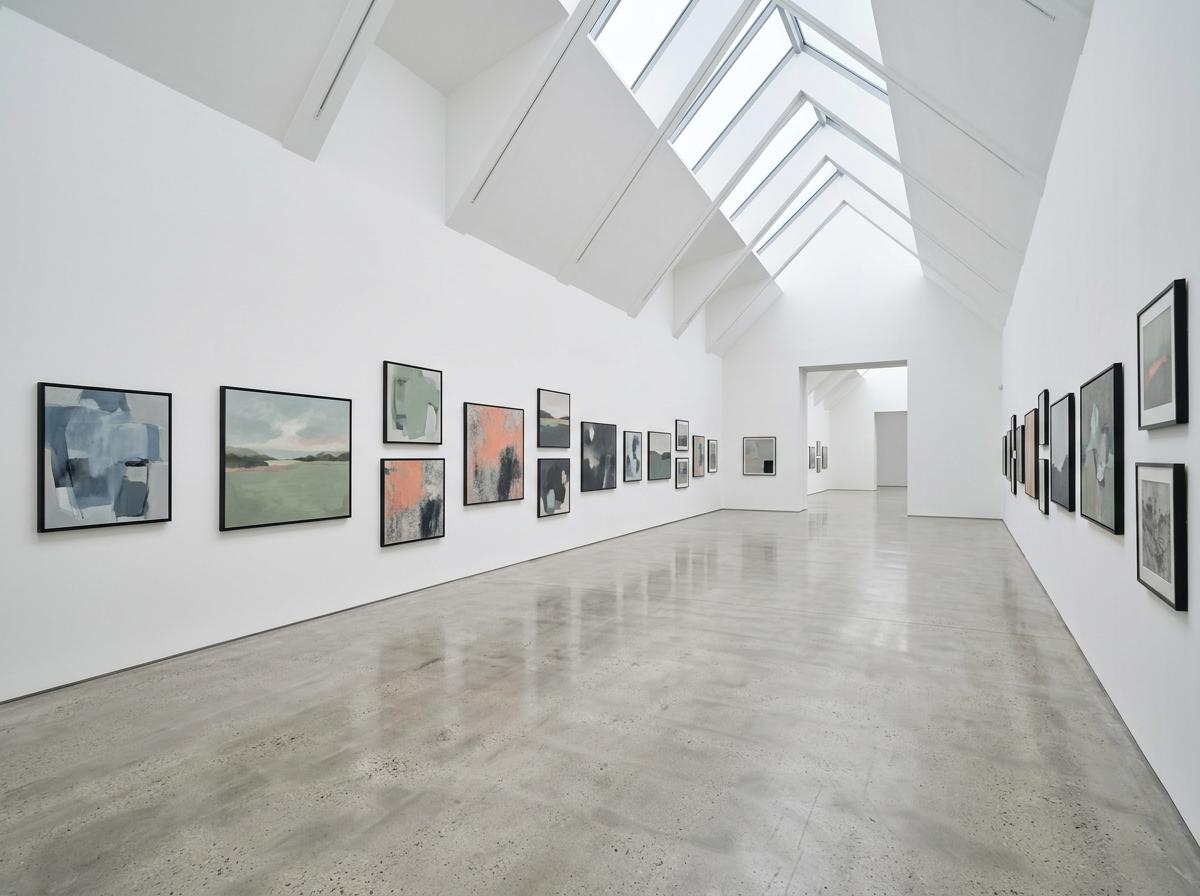
A Guide to the National Gallery of Art Collection
The National Gallery of Art in Washington, D.C. holds one of the most significant collections of Western art in the world. Founded in 1937 with Andrew Mellon's gift of 126 works and the building to house them, it has grown to more than 150,000 objects spanning roughly 700 years of European and American art.
The entire public-domain portion of that collection, 68,816 objects, is available to search on Retrievals using natural language. This guide covers what's in the collection, where its strengths lie, and how to find specific periods and traditions through semantic search.
Dutch and Flemish Golden Age
The NGA's Dutch and Flemish holdings are among the finest outside the Netherlands. The 17th century is particularly deep, featuring Rembrandt, Vermeer, Frans Hals, Pieter de Hooch, Jan Steen, Judith Leyster, Anthony van Dyck, and Peter Paul Rubens, with a collection that includes not just major paintings but an extensive range of prints and drawings from the period.
What makes this holding unusual is the breadth within the tradition. You'll find Rembrandt's late self-portraits alongside his etchings, and Vermeer's domestic interiors alongside lesser-known contemporaries who worked in the same mode. The collection is deep enough that a query like "Dutch interior, warm light, domestic quiet" surfaces not just the famous works but the surrounding tradition.
Search suggestions:
- "candlelight interior, single figure, Dutch Golden Age"
- "Baroque portrait with dramatic shadow"
- "still life with flowers and insects, Dutch, 17th century"
- "peasant scene, earthy tones, Flemish"
French Impressionism
The NGA holds exceptional Impressionist and Post-Impressionist work. Monet is represented across multiple periods (early plein-air paintings, the Vétheuil landscapes, the later atmospheric series), while Manet, Degas, Renoir, Pissarro, Sisley, Cassatt, Cézanne, Seurat, and van Gogh are all present in depth.
This is one of the collection's most search-friendly periods. Impressionist works encode strongly in the embedding space: the loose brushwork, the specific quality of outdoor light, the interest in everyday subject matter all produce distinctive vector signatures. Mood-based queries tend to work particularly well here.
Search suggestions:
- "Monet water reflections, soft light"
- "Impressionist figure in garden, dappled sunlight"
- "Post-Impressionist landscape, bold color, geometric"
- "Degas ballet, movement, stage light"
American Art
The NGA's American collection is one of its defining strengths, spanning from 18th-century portraiture through 20th-century modernism.
The Hudson River School is exceptionally well represented: Thomas Cole, Frederic Church, Albert Bierstadt, Asher B. Durand. These are large-scale landscape paintings in the Romantic tradition: vast wilderness, dramatic light, the sublime scale of North American geography. Queries about wide landscapes and sky tend to find this material.
Winslow Homer and Mary Cassatt are both present in depth. Homer's marine subjects and Cassatt's Impressionist domestic scenes are among the most searchable works in the collection. Their visual language is distinct enough that semantic queries reliably surface them.
John Singer Sargent's portraits are a particular strength. The combination of fluid brushwork, formal dress, and psychological intensity makes them distinctive in the embedding space.
Search suggestions:
- "vast American landscape, mountain light, 19th century"
- "Hudson River School, dramatic sky, wilderness"
- "Sargent portrait, formal dress, psychological depth"
- "Cassatt mother and child, Impressionist"
Italian Renaissance and Baroque
The Italian holdings are deep in the High Renaissance and Baroque periods. Raphael, Leonardo (studies and attributed works), Titian, Giorgione, Tintoretto, Caravaggio, and Guido Reni are all represented.
The Caravaggio works are among the most search-interesting in the entire collection. The extreme chiaroscuro, the theatrical lighting, and the violent or devotional subject matter produce a very distinctive embedding signature. Any query about dramatic candlelight or Baroque intensity tends to surface Caravaggio-adjacent works, including the large tradition of painters who worked in his shadow (the caravaggisti).
Search suggestions:
- "Caravaggio chiaroscuro, religious subject, dramatic light"
- "Renaissance Madonna and Child, gold ground"
- "Italian Baroque ceiling, foreshortening, dynamic figures"
- "High Renaissance portrait, classical pose"
Works on Paper
A significant fraction of the 68,816 objects are prints, drawings, and watercolors. This is where the collection often surprises. The NGA holds extensive holdings of:
- Old Master drawings: preparatory studies by Raphael, Michelangelo (attributed), Tiepolo, Guercino
- Dutch and Flemish prints: Rembrandt's etchings are among the finest impressions in existence; Dürer's engravings are well represented
- American watercolors: Winslow Homer's watercolors of the Adirondacks and Caribbean
- 19th-century prints: Daumier, Whistler, and the French printmaking tradition
Works on paper often don't appear in museum searches oriented around paintings. In Retrievals, they're fully indexed. A query about "precise etched line" or "gestural ink drawing" will surface this material.
Search suggestions:
- "Rembrandt etching, expressive line, biblical subject"
- "botanical illustration, scientific precision, engraving"
- "watercolor landscape, loose wash, American"
- "preparatory drawing, red chalk, Renaissance"
Photography
The NGA holds a photography collection that spans the history of the medium. Alfred Stieglitz, Edward Weston, Dorothea Lange, Walker Evans, and Paul Strand are represented, alongside earlier 19th-century photography and daguerreotypes.
Photography tends to cluster differently in the embedding space than paintings. The visual grammar is distinct enough that mood queries sometimes surface unexpected photographic works alongside paintings. Searching for "gray light, solitary figure, early 20th century" might return both a Hopper painting and a Stieglitz photograph.
How to Search the Collection
The NGA's own search interface requires you to specify what you're looking for. Retrievals inverts that. You can approach the collection through:
Period and movement: "Impressionism," "Baroque," "Dutch Golden Age," "American Realism": all work as queries, and the results will reflect the actual visual characteristics of those traditions, not just their catalog tags.
Mood and atmosphere: "Grief in warm shadow," "vast emptiness," "domestic intimacy": these find works by emotional register rather than subject classification.
Visual description: "Deep red and gold, heavy drapery," "soft diffuse light, cool tones," "dynamic diagonal composition". Compositional and coloristic descriptions are among the most reliable ways to narrow to a specific aesthetic.
Artist style: You don't need to know an artist's name. "Paintings that look like Vermeer" or "the mood of late Rembrandt" will find the works themselves and the surrounding tradition.
The collection is 68,816 objects. Almost none of them can be found by mood, atmosphere, or visual impression through the NGA's own interface. That's what Retrievals is for.