How to Search Art by Mood, Not Keywords
Melancholy, peaceful, eerie, sublime: mood is one of the strongest things people remember about a painting, and one of the hardest things to search for. Here's how to actually search a collection by feeling.
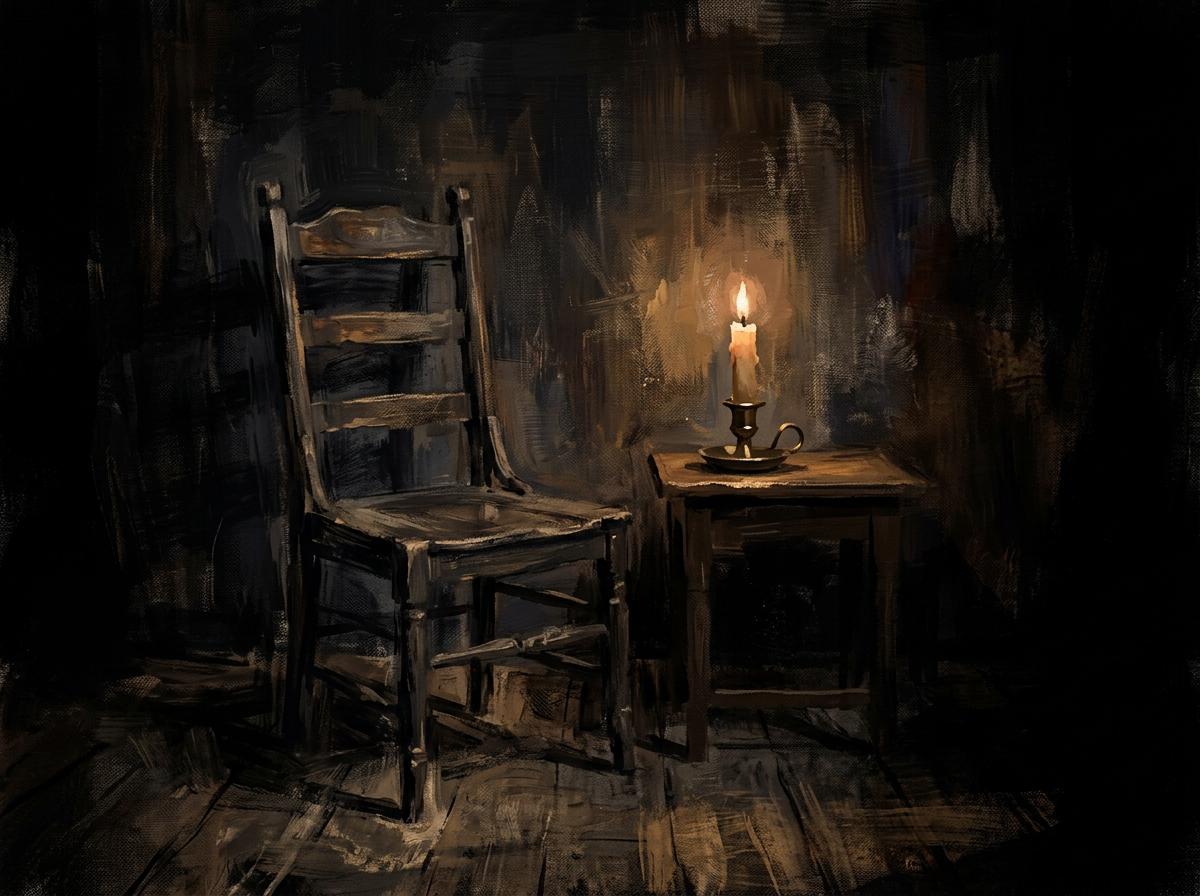
How to Search Art by Mood, Not Keywords
Mood is often the first thing that comes back when you think of a painting: a quiet, melancholy stillness, an eerie unease, a sense of calm. It is rarely the artist's name or the title. Museum search boxes are not built for this. They index artist, title, medium, and date, not "this made me feel uneasy."
Here is how to actually search a collection by mood.
Why mood-first search is hard
Catalog metadata describes what a painting is, not what it feels like. Two paintings can share a subject (a woman by a window) and feel completely different (peaceful versus lonely), and no keyword field captures that difference. Mood lives in the light, the composition, the expression, and the color palette, all of which are visual, not textual.
That means a text-only keyword search almost always fails when mood is your only anchor. You need a system that reads the image itself, not just its label.
Name the mood precisely
Before searching, write down the feeling in as much detail as you can, and pair it with whatever visual detail comes with it:
- The mood itself: melancholy, peaceful, eerie, sublime, tender, oppressive
- What carries it: a single figure, an empty room, a vast landscape, a storm
- Light: dim candlelight, harsh midday sun, soft overcast grey, warm dusk
- Scale: an intimate close scene versus a vast, dwarfing landscape
"A lone figure in a vast, sublime landscape under stormy light" will perform far better than "sublime painting."
Option 1: Museum keyword search
Museum search boxes occasionally tag broad emotional categories (some collections label works "melancholic" or "tragic" in curator notes), but this is inconsistent and rare. Most of the time, mood simply is not a searchable field.
Best for: the small number of works where a curator has already written the mood into the record.
Weak for: almost everything else.
Option 2: Semantic search on a fixed collection
This is where meaning-based search has a real advantage. Retrievals is a semantic search tool over 68,816 open-access works from the National Gallery of Art. Describe the mood and what carries it, and the system embeds your description and every artwork image into the same vector space, matching on the feeling the image actually conveys, not a metadata tag.
Example queries that work well:
- "melancholy figure alone by candlelight"
- "eerie, unsettling stillness in an empty room"
- "peaceful autumn forest in golden light"
- "sublime, dwarfing landscape under stormy sky"
How it works (briefly): each artwork is embedded with Qwen3-VL-Embedding-2B, retrieved via FAISS HNSW approximate nearest-neighbour search, then reranked by a Qwen3-VL cross-encoder before results are returned. Because mood is expressed visually, through light, composition, and expression, the image embedding captures it even when no curator ever wrote it down.
Best for: NGA holdings, mood-led memories, scenes you can feel but not name.
Weak for: paintings outside the NGA open-access dataset, or moods with no visual anchor at all (a mood remembered with no sense of subject, light, or scale).
Option 3: Ask a community
If automated search comes up empty, communities like r/WhatIsThisPainting can sometimes place a work from a mood-led description, especially paired with a period or region guess.
Best for: obscure works, or when you suspect it is outside a single collection.
Weak for: instant results.
A practical order to try
| Step | Method | When to use it |
|---|---|---|
| 1 | Write out the mood and what carries it (light, scale, subject) | Always |
| 2 | Museum keyword search | Rare case where mood is in curator notes |
| 3 | Retrievals semantic search | Mood-led memory, may be NGA collection |
| 4 | Community identification | Search returns nothing plausible |
Try it
If your memory points toward the National Gallery of Art, open Retrievals and describe the mood in plain language. No artist name or title required.
For how mood-based matching actually works under the hood, see The Mood Index.